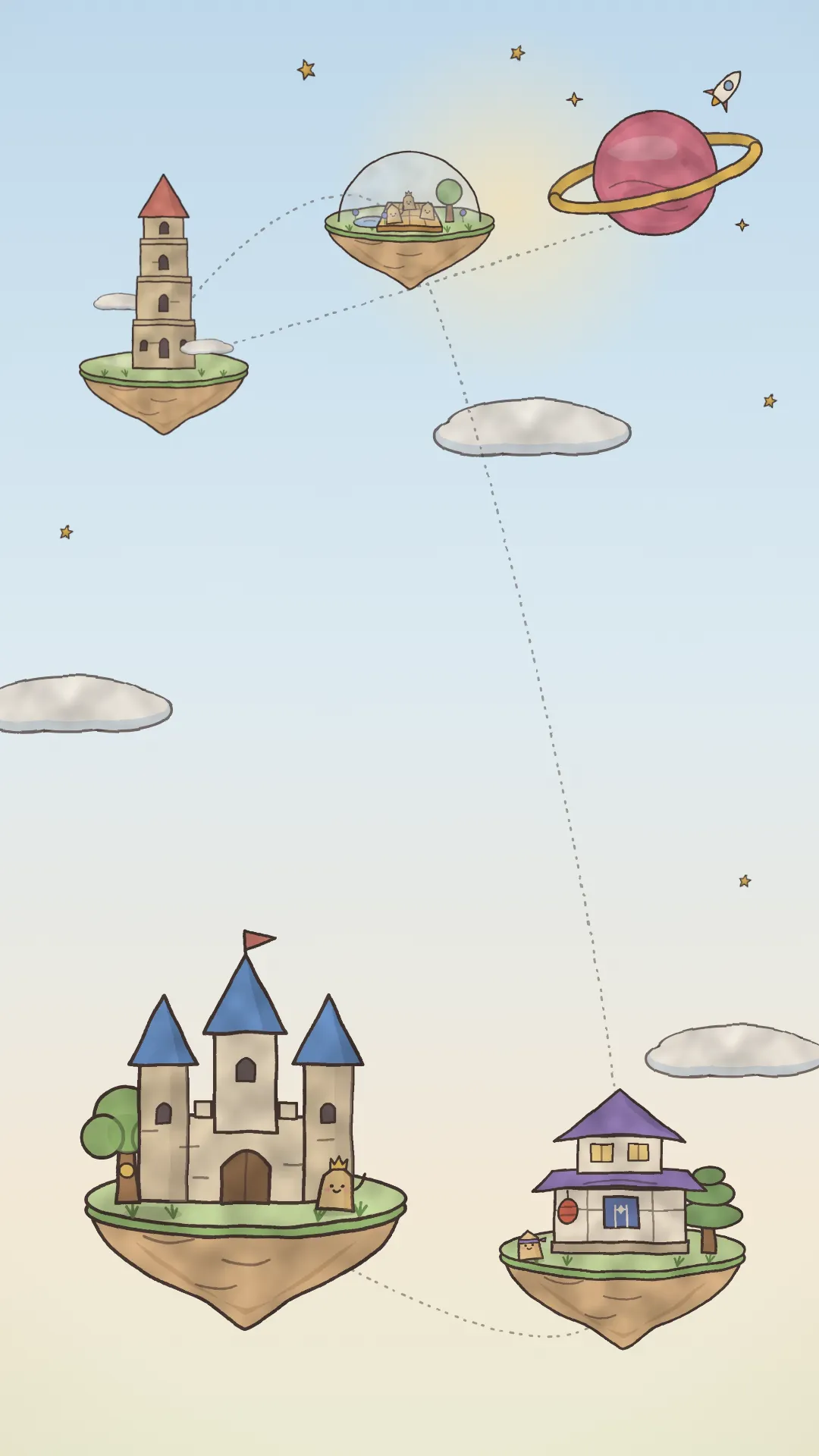

7-day free trial — everything included
Learn Japanese the way
Japanese kids do. By playing.
Huu Shogi teaches shogi — Japanese chess — to children ages 4–10 in Japan. Every word is simple hiragana, every line is read aloud by a native voice. Which makes it a surprisingly good immersion tool for Japanese learners.
After the free week:¥780/mo(about US$5)
① Enter your email → ② Click the link we send → ③ Play today
No credit card required

Thinks ahead
logical thinking
Sticks with it
perseverance
With a voice guiding every step, kids play on their own — even in a family that has never touched shogi. And for your family, every one of those steps is in Japanese.
What’s inside
AI games that think with you
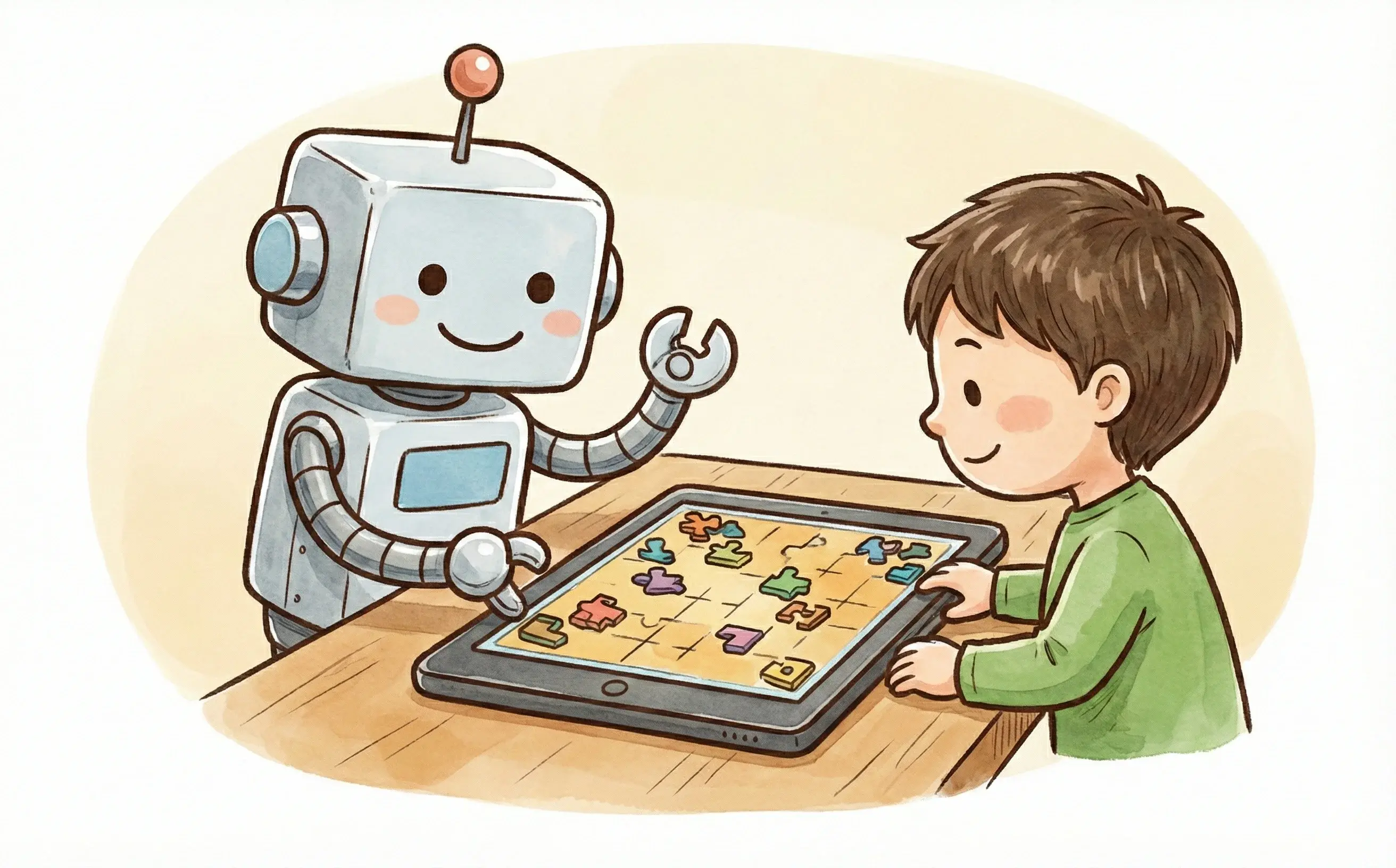
A dedicated educational AI matches your child’s level. Instead of giving answers, it drops hints that let kids notice things themselves — building the habit of thinking it through.
Checkmate puzzles (tsume shogi)
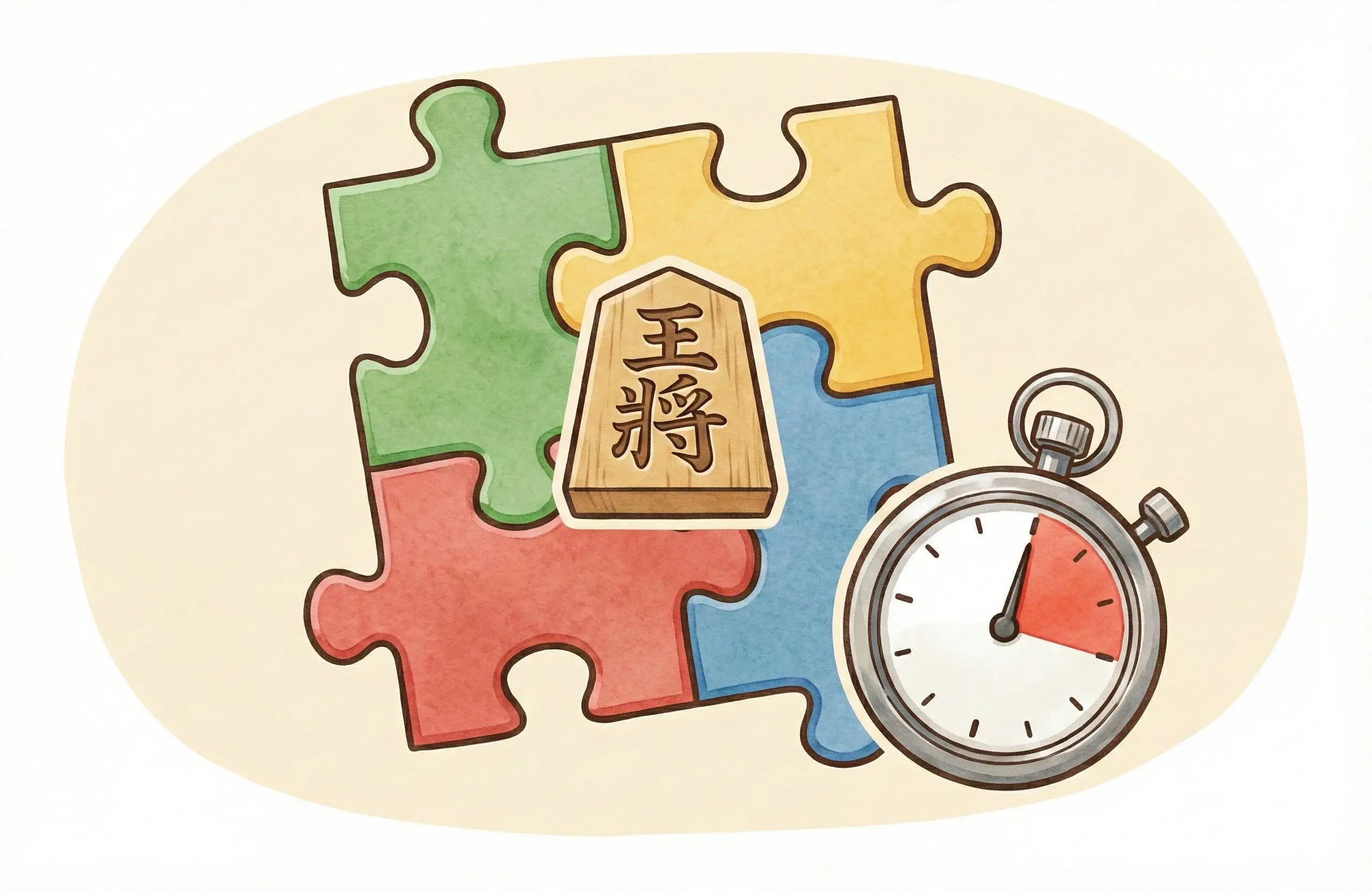
Short, snackable logic puzzles solved in minutes. Kids solve them like riddles between adventures — and absorb the Japanese instructions while they play.
A story mode that teaches from zero

Just follow the adventure, and piece movements and rules come naturally. No parent needs to teach — the app (and its gentle Japanese voice) does it.
No app-store download — runs in the browser on iPhone, Android, tablets, and PCs
Shogi is Japan’s chess. Try it right now.
Trap the King and you win. Play one guided AI game in the browser —
no sign-up, nothing to install.
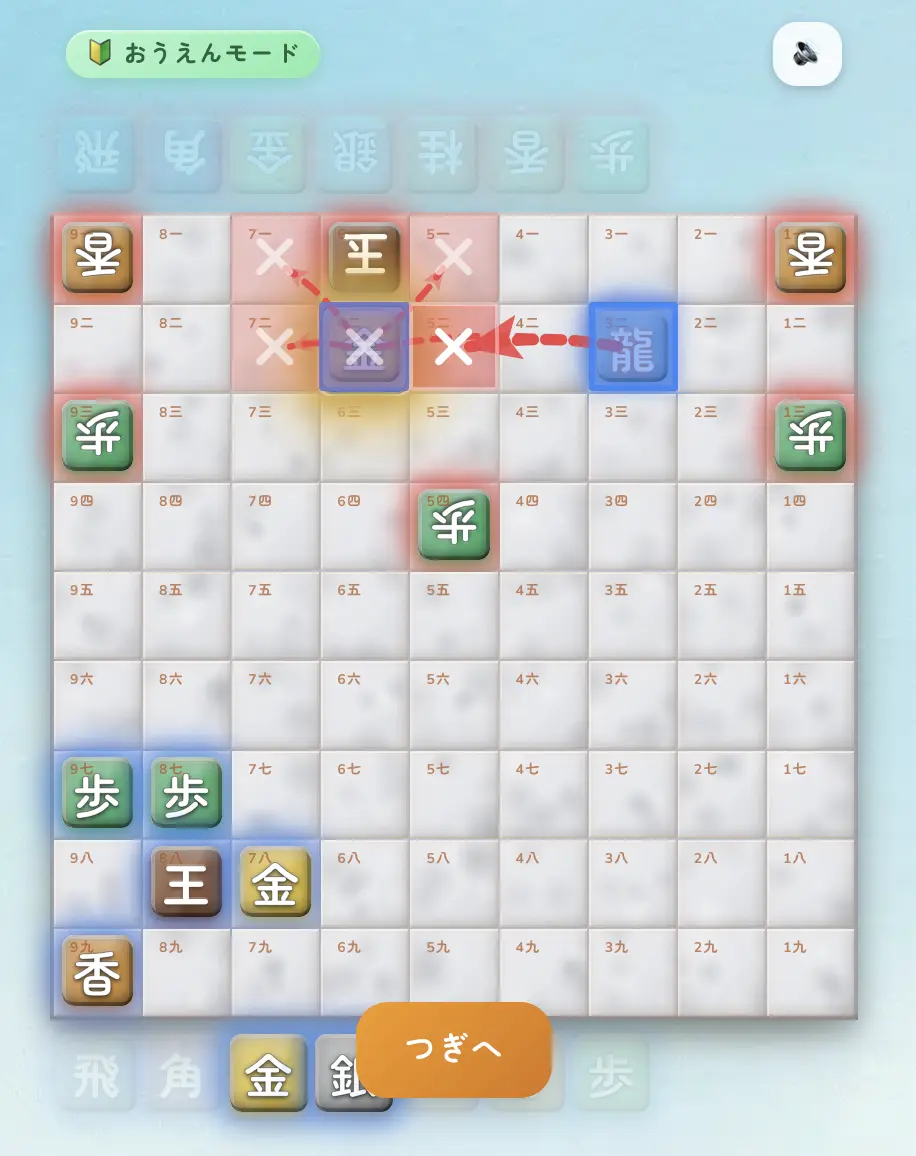
Every escape square gets an ×, and a friendly Japanese voice calls the checkmate. The demo is in Japanese — consider it your first lesson.
Try a real AI game→
No sign-up needed — plays right in the browser
Inside the app
Every screen is written in simple hiragana and read aloud by a natural Japanese voice — no English, no romaji. Swipe to look around.
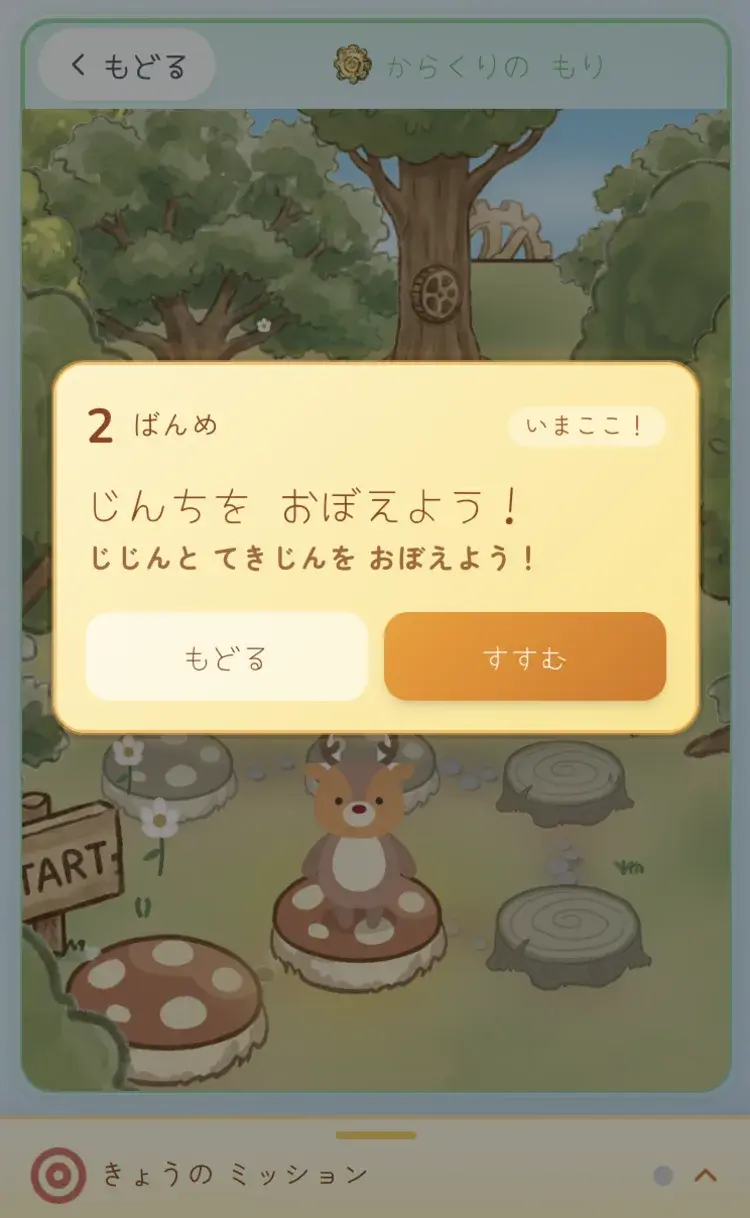
The adventure map
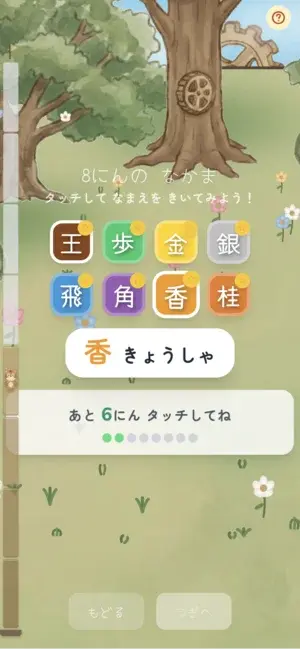
Learning the pieces
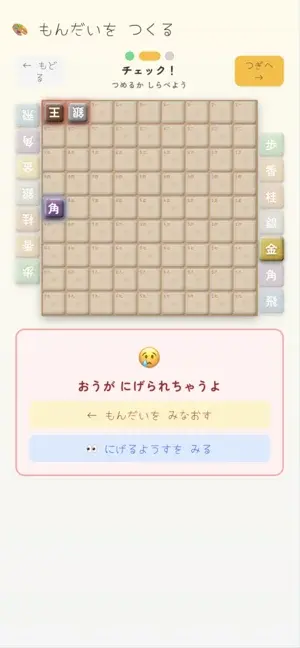
Checkmate puzzles
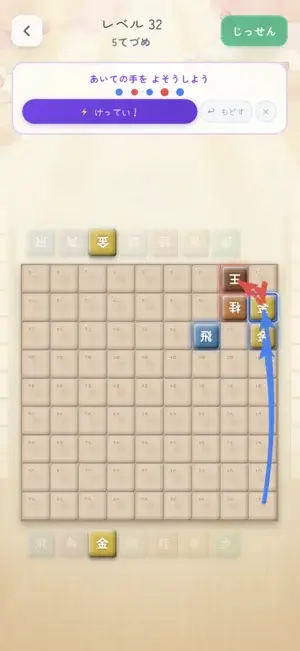
A hint when they get stuck
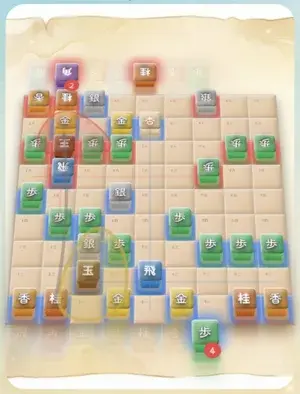
A game against the AI
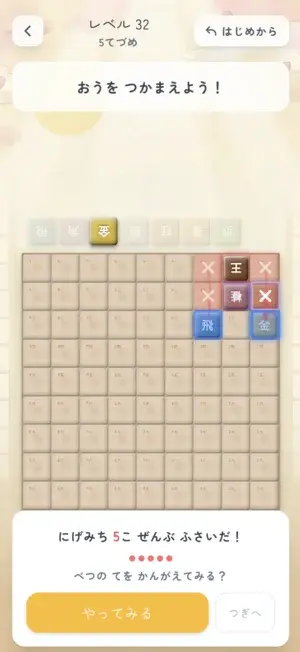
Stage cleared
Built for Japanese kids.
Perfect for Japanese learners.
All hiragana, zero kanji walls
The app is designed for children who can only read kana — so every menu, story line, and hint is in simple hiragana. If you can read あいうえお, nothing in the app is locked to you.
Every line has a native voice
Kids who can’t read yet play by listening — and so can you. Text and natural Japanese audio always come together, which is exactly how comprehensible input is supposed to work.
Real Japanese, real context
Not textbook drills: you hear the words Japanese children actually use — すごい! もういっかい! — attached to things happening on screen. Vocabulary sticks because the game gives it meaning.
DATAReal usage data
How Japanese kids
actually play.
Measured in production, April–September 2026 — since launch.
91puzzles84% solved
attempted per child — small wins, stacked up
2.5min9.9 min a day
median play time per session — short enough to stay sharp
86%played 3+ days
among children who reached a game against the AI
Figures come from production usage between April 7 and August 31, 2026, excluding internal test accounts. Play time is a median, not an average; the daily figure counts only the days a child actually played.
VOICEFrom a family
What the numbers
do not show.
It surprises me — before I know it, they’re playing at their own pace, without me prompting them at all.
When we’re waiting at a restaurant, I used to hand over my phone and say “you can use Mom’s phone for this.” Now they ask me first:
“I want to play Huu Shogi — can I borrow your phone?”
Knowing they can’t be matched with strangers means I can hand it over without worrying. It’s also easy for siblings to start a game together.
Thank you for opening up a new interest for my child.
EXPERTFrom a pediatrician
A view from
the clinic.
There are three areas in particular where shogi can be expected to support a child’s development.
- Visual spatial
- The ability to understand what you see and how it sits in space — the kind of thinking you use with building blocks or jigsaw puzzles. In shogi, it is exercised by looking at the board and grasping how the pieces stand in relation to one another.
- Fluid reasoning
- The ability to take the information in front of you and reason your way to what comes next. Reading ahead and working through checkmate puzzles seem to me an effective way to develop it.
- Working memory
- Opening up the notepad in your head — holding information for a short time, updating and rearranging it as you work. Keeping candidate moves and lines several moves deep on that notepad and comparing them can be expected to strengthen it.
With Huu Shogi the family doesn’t need to teach shogi. Children can learn the rules from scratch and keep playing of their own accord, which can be expected to develop these areas efficiently.
Visual spatial, fluid reasoning and working memory are standard categories for describing cognitive ability. They are also the names of three of the primary index scales in the Wechsler Intelligence Scale for Children (WISC-V).
Who plays Huu Shogi abroad?
- Bilingual families — parents raising kids abroad who want daily Japanese exposure that isn’t a worksheet.
- Japanese learners around JLPT N5–N4 — adults included. A kids’ game is the rare place where native content matches your level.
- Chess families — kids who love chess and want to try its Japanese cousin, where captured pieces come back into play.
One thing to know before you start
Huu Shogi is a Japanese product for Japanese families — there is no English mode, by design. The game, the parent dashboard, and the emails are all in Japanese. If that sounds like a dealbreaker, it probably isn’t the app for you. If it sounds like exactly the immersion you’ve been looking for — welcome.
Simple pricing
¥780/month
about US$5 · base ¥540 + ¥240 per child (up to 9 siblings) · parents free
- ✓ Story mode, AI games, checkmate puzzles, family games — all included
- ✓ Start without a credit card (no surprise charges)
- ✓ No ads · cancel anytime with one tap
Is the app available in English?
No — and that is the point. Huu Shogi is built for Japanese children ages 4–10, so everything is written in simple hiragana and read aloud by a natural Japanese voice. For Japanese learners it works like an immersion environment: simple language, visual context, and a fun reason to keep listening. The parent dashboard and emails are also in Japanese (browser translation handles them fine).
What level of Japanese do we need?
If you (or your child) can read hiragana — or are learning it — that is enough. There are no kanji walls: every piece of text is in kana, and every line has audio, so you can follow along even before you read confidently. The vocabulary is what real Japanese kids use every day, roughly JLPT N5–N4 territory.
Do we need to know shogi or chess?
Not at all. The story mode teaches the rules from zero, one piece at a time, and the AI opponent adjusts to the player. Shogi pieces are written in kanji (like 金 for Gold), but the app introduces them gently with visuals and audio.
How much does it cost?
The first 7 days are free, with no credit card required. After that it is ¥780 per month (about US$5) for one child; each sibling is +¥240 and parent accounts are free. Payment is handled by Stripe, international cards work, and you can cancel anytime with one tap.
What devices does it run on?
Any modern browser on a phone, tablet, or computer. There is nothing to install from an app store — sign up with an email address and play right away.
Start with one week.
If it’s not for your family, it simply ends. No charge, no emails to fight.
① Enter your email → ② Click the link we send → ③ Play today
No credit card required